
Let me explain.
A cheap ukulele made from a beautiful piece of koa will still sound bad if the construction is poor. And a well-built ukulele made from laminate mahogany can sound absolutely lovely. So please, don’t get so obsessed with tonewoods that you ignore build quality and setup. We’ll talk about those in a moment.
That said, wood does have a real impact on tone and feel, and it’s worth understanding the basics.
Koa: the soul of the ukulele
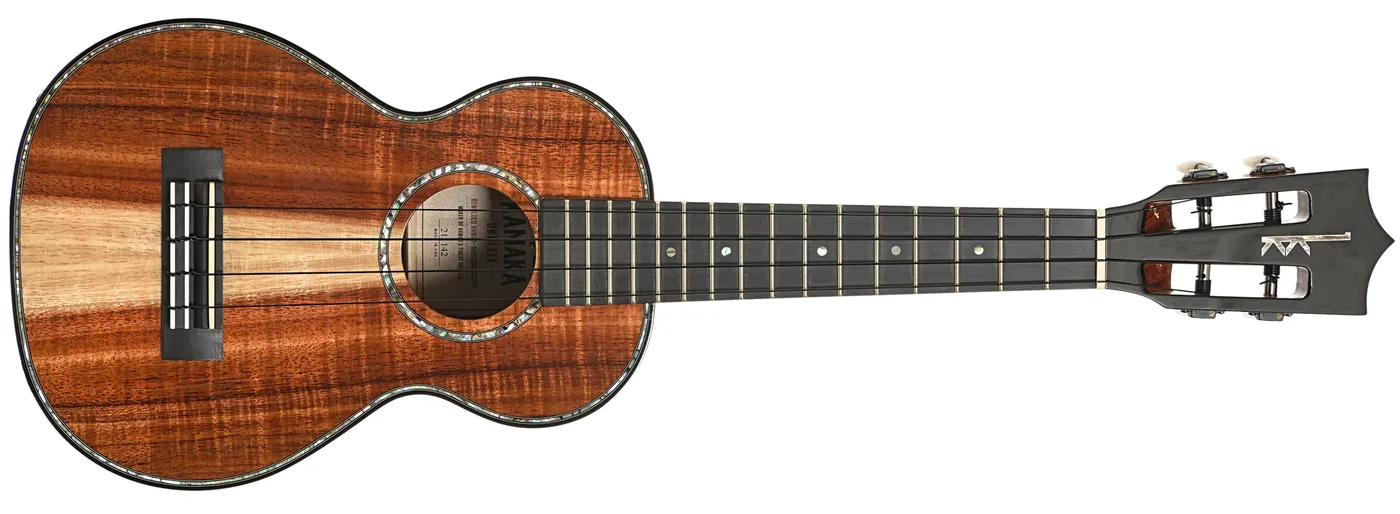
If the ukulele had a national wood, it would be koa. This Hawaiian hardwood is where the ukulele story begins: the earliest ukuleles were made from koa, and many players still consider it the gold standard.
Koa has a beautiful mid-range warmth with a bright, clear high end. It’s often described as having a sound that “opens up” over time. The more you play it, the better it sounds. Jake Shimabukuro’s custom Kamaka tenor is built from solid koa, and you can hear that complex, singing quality in every note he plays.
The downside? Koa is expensive. A solid koa ukulele from a reputable brand is a serious investment.
Tone character: Warm mids, bright highs, complex and musical. Improves with age and playing.
Models to look at
-
Kala Exotic Mahogany Koa Tenor ~£130–£170 / $150–$200
A laminate koa option that gives you the look and a taste of the tone without the premium price. A good way to try koa aesthetics at an accessible level.
-
Kanile’a K-1 Tenor ~£700+ / $950+
Exceptional Hawaiian craftsmanship with premium solid koa and outstanding tonal clarity.
-
Kamaka HF-2 Concert ~£1,300+ / $1,800+
Handmade in Hawaii since 1916, Kamaka is the oldest ukulele manufacturer in the world and the gold standard for koa instruments.
Mahogany: the workhorse
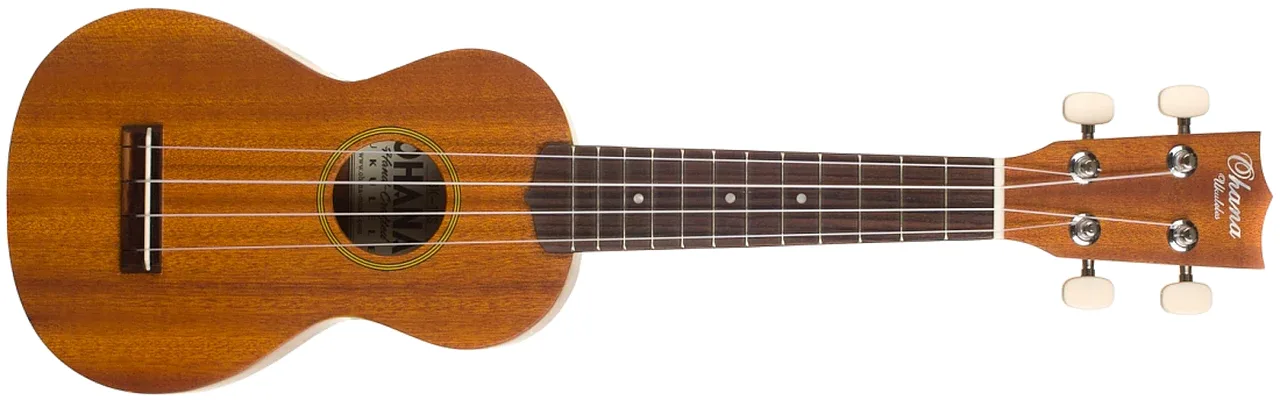
Mahogany is one of the most common tonewoods across all stringed instruments, and for good reason. It’s affordable, readily available, stable, and it sounds great.
Mahogany-bodied ukuleles tend to have a warm, earthy, slightly darker tone compared to koa. This makes them feel cosy and mellow, very pleasing for folk-influenced or singer-songwriter styles.
It’s also worth remembering that when IZ recorded his iconic “Somewhere Over the Rainbow,” the magic came from the player, not an exotic tonewood. A simple, warm mahogany instrument in the right hands can be absolutely breathtaking.
Tone character: Warm, earthy, mellow. Great sustain.
Models to look at
-
Kala KA-15S / KA-C / KA-T ~£85–£90 / $110–$120
The definitive mahogany entry-level line, available in soprano, concert, and tenor sizes. Reliable, well-made, and great value.
-
Ohana SK-10 / CK-10 / TK-10 ~£70–£110 / $80–$130
Ohana’s laminate mahogany range is consistently well-built and sounds lovely for the price.
-
Martin Beck Spruce/Mahogany Concert ~£2,200+ / $3,000+
One of the highest-rated ukuleles of 2024. A handmade instrument that shows just how much mahogany can do in the right hands.
Spruce: the bright and articulate one
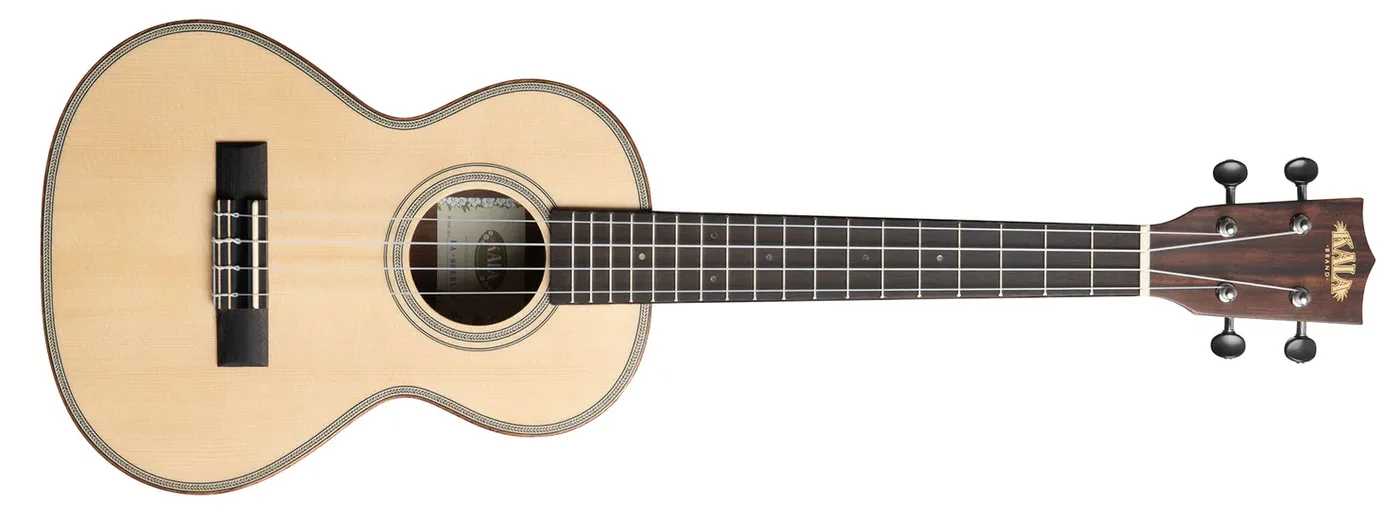
You’ll mostly find spruce on the top (soundboard) of a ukulele rather than on the back and sides. Spruce is the most common soundboard wood on acoustic guitars, and it has similar qualities on the ukulele: clarity, brightness, and excellent dynamic response.
A spruce-top ukulele tends to respond very well to different playing dynamics. Play softly and it sings sweetly; dig in harder and it projects with authority. This makes it a favourite among fingerstyle players who rely on nuance and touch sensitivity.
Tone character: Clear, bright, articulate, responsive.
Models to look at
-
Kala Solid Spruce Top Tenor ~£160–£180 / $220–$240
A great mid-range option that offers the brightness of spruce with mahogany back and sides for warmth.
-
Cordoba 20TM Tenor ~£180–£200 / $240–$260
A mahogany body with a spruce top that combines warmth and clarity beautifully.
-
aNueNue UC-110 “Green Bird” Concert ~£1,000+ / $1,200+
One of the most acclaimed ukuleles of 2024, featuring a solid spruce top with stunning aesthetics and an exceptional sound.
Cedar: the warm alternative to spruce
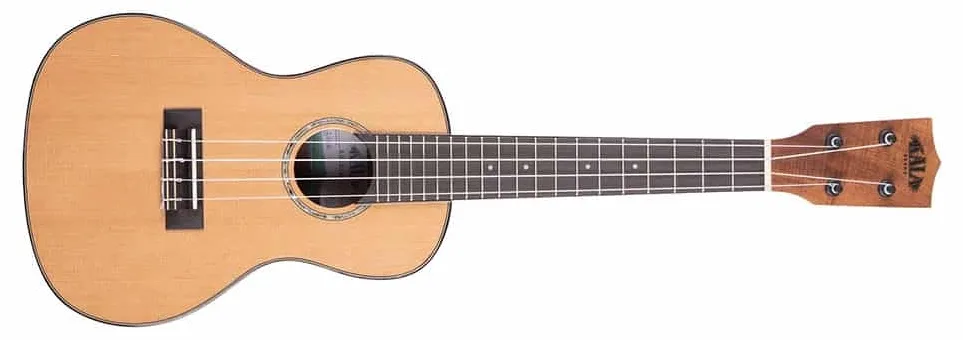
Cedar is a great alternative to spruce on the soundboard. Where spruce tends to be bright and clear, cedar is warmer and more immediately responsive. It doesn’t need as much “playing in” time to open up.
Players who find spruce a little too bright, or who play with a lighter, more delicate touch, often prefer cedar. It’s also a beautiful-looking wood with a distinctive reddish-brown colour.
Tone character: Warm, smooth, responsive right away.
Models to look at
-
Kala KA-SCAC-C Solid Cedar Top Concert ~£260–£300 / $280–$350
A well-regarded concert uke pairing a solid cedar top with acacia back and sides.
-
Ohana TK-50G Solid Cedar & Rosewood Tenor ~£350–£380 / $450–$500
An all-solid cedar and rosewood tenor widely praised for its rich, warm tone and excellent sustain.
Acacia: the modern koa alternative
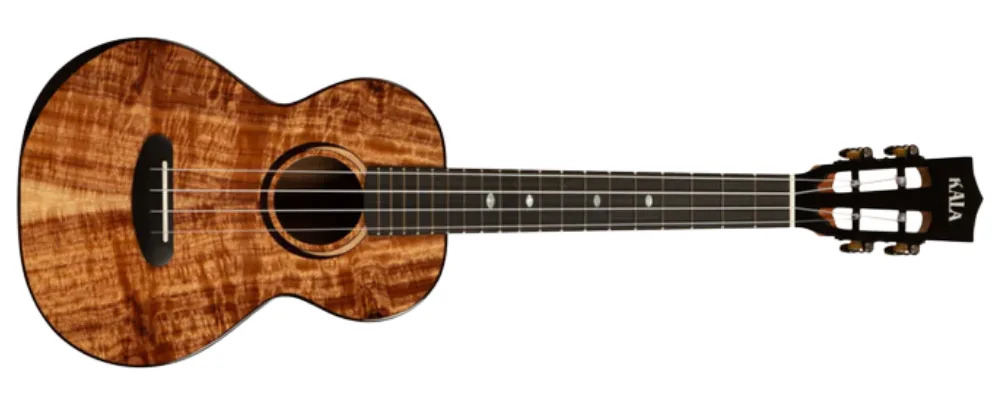
As koa has become rarer and more expensive, acacia has emerged as an excellent alternative. It’s in the same botanical family as koa and has similar tonal properties: a good balance of warmth and brightness, with attractive grain patterns.
Tone character: Balanced, similar to koa but slightly less complex.
Models to look at
-
Caramel CAG28 Acacia Concert ~£70–£85 / $80–$100
An impressive budget option for those drawn to the look and feel of acacia.
-
Kala Acacia Tenor ~£280–£340 / $375–$450
A well-regarded instrument that delivers koa-like aesthetics and tone at a significantly lower price.
Laminate vs. solid wood: the big question
Here’s something important that doesn’t always get explained clearly.
Solid wood means the top, back, and/or sides are made from real wood. Solid wood instruments resonate more freely, have more complex tones, and improve with age.
Laminate means multiple thin layers of wood that have been bonded together. Laminate instruments are more resistant to humidity and temperature changes, which makes them great for travel or playing outdoors, and more affordable.
The honest truth? For a beginner, a well-made laminate ukulele can sound perfectly lovely. Don’t let anyone make you feel bad for starting on one. But as you progress and your ear develops, you’ll start to hear and feel the difference.
A great middle ground is a solid top with laminate back and sides. Examples like the Kala Solid Spruce Top Tenor or Cordoba 20TM give you the tonal benefits of solid wood where it matters most (the soundboard), at a price that won’t make you wince.