
Here are the four main types of ukulele you’ll encounter most often.
The soprano: the classic little guy
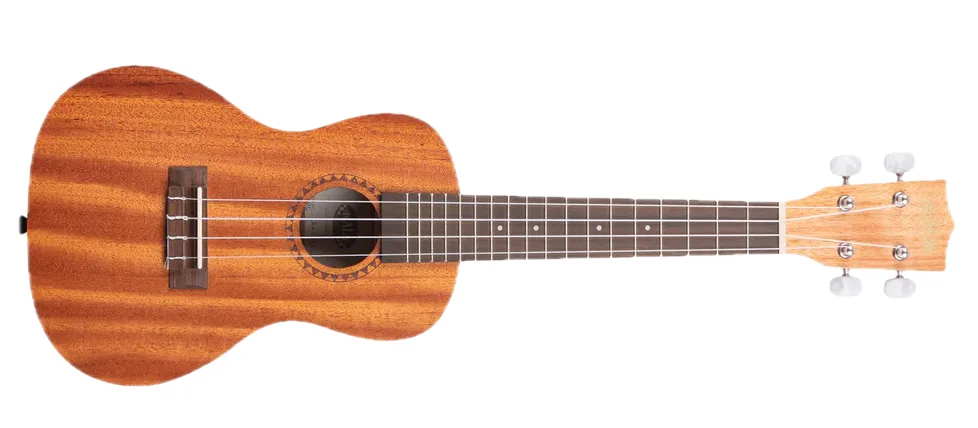
The soprano is what most people picture when they think “ukulele.” It’s the smallest of the main sizes, typically around 21 inches long with a scale length of about 13 inches.
This is the size that gave the ukulele its famously bright, cheerful, almost toy-like sound. You know that plinky, happy tone you hear in classic Hawaiian music? That’s the soprano.
Legendary Hawaiian performer Israel Kamakawiwoʻole, known as IZ, played a soprano-family instrument for much of his career, and if you’ve ever heard his medley of “Somewhere Over the Rainbow” and “What a Wonderful World,” you’ll know exactly what I mean by that warm, intimate ukulele magic.
Who is it for?
The soprano is great if you love that traditional ukulele vibe and want something ultra-portable. It also tends to be the most affordable option, which makes it a popular choice for beginners.
The one thing to know is that the frets are quite close together, which can make things a little cramped if you have larger hands. It’s not a dealbreaker (plenty of people play soprano ukes their whole lives), but it’s worth being aware of.
Sound character: Bright, sweet, a little twangy. Very traditional.
Models to look at
-
Makala Dolphin ~£35–£45 / $45–$55
Made by Kala, this is a fun, colourful intro uke that punches above its price point. A great first instrument, especially for younger players.
-
Kala KA-15S ~£85–£90 / $110–$120
One of the most recommended beginner sopranos on the market. Mahogany body, Aquila strings straight out of the box, and reliably well set up for the price.
-
Martin S1 ~£400+ / $450+
When you’re ready to invest in something special, Martin’s soprano is a genuinely beautiful instrument. The craftsmanship is exceptional and the tone is rich and complex.
The concert: the Goldilocks uke
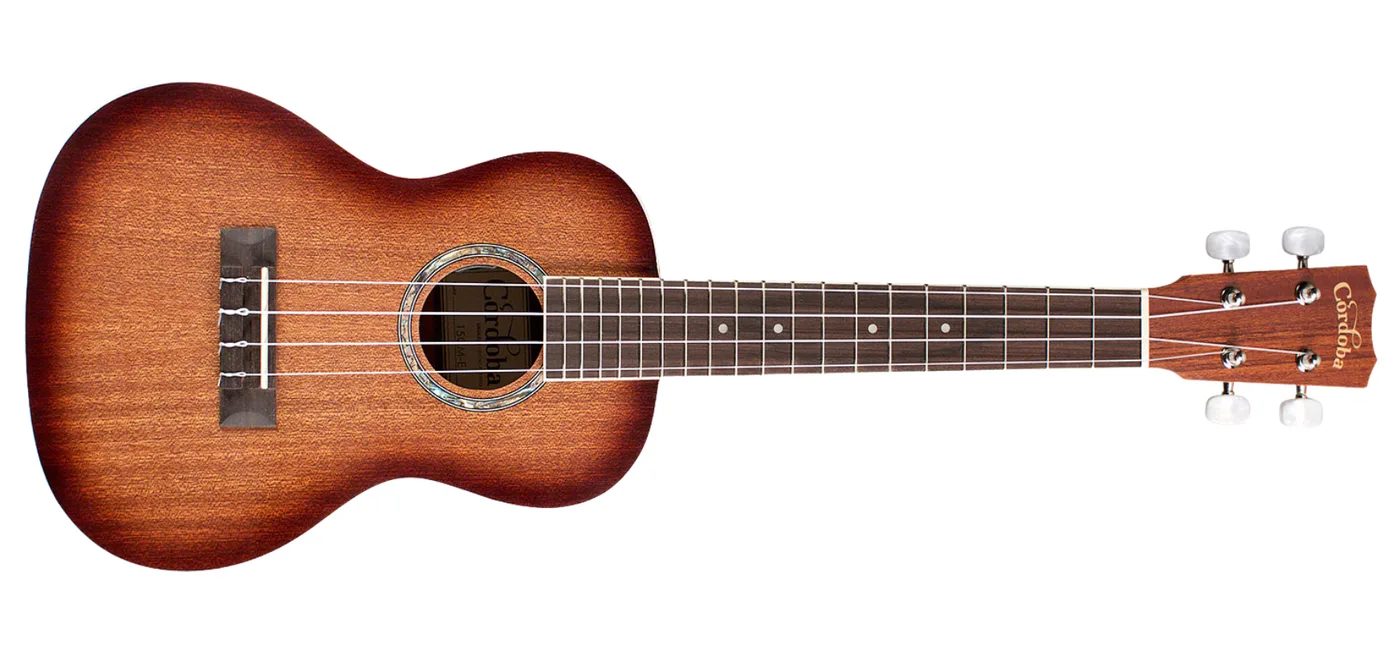
Step up one size and you have the concert ukulele, which is typically around 23 inches long with a scale length of about 15 inches. It’s a little bigger, which means a little more volume, a slightly fuller tone, and more space between the frets.
For a lot of players, especially those coming from guitar, the concert is the “just right” option. It still sounds unmistakably like a ukulele, but it’s a bit easier to play and has a touch more depth to the sound. Singer-songwriters like Grace VanderWaal tend to favour the concert size for its balance of portability and tone.
Who is it for?
Players with medium-sized hands, beginners who want a bit more room to manoeuvre, and anyone who wants to straddle the line between that classic ukulele sound and something a little more versatile.
Sound character: Bright but with a bit more warmth and sustain than the soprano.
Models to look at
-
Kala KA-C ~£115–£125 / $140–$150
The concert version of the KA-15S. Warm mahogany tone, reliable tuners, and a comfortable playability. Hard to beat at the price.
-
Cordoba 15CM ~£120–£130 / $145–$160
Cordoba’s classical guitar heritage shows through in the string spacing and the clean finishing. A particularly good choice for fingerstyle playing.
-
Ohana CK-70RB ~£155–£175 / $180–$200
A step up into solid wood territory. Ohana make beautifully crafted instruments that offer near-professional quality without the premium price tag.
The tenor: the player’s choice
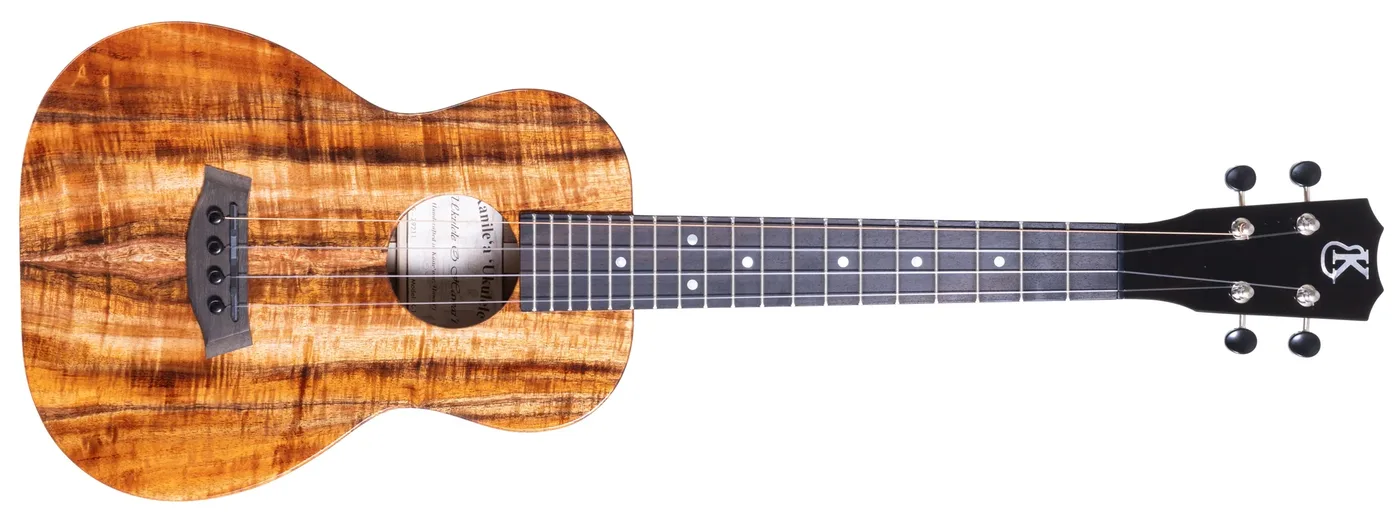
The tenor is where things start to get really interesting for more serious players. At around 26 inches with a scale length of about 17 inches, the tenor has noticeably more room on the fretboard, more volume, and a richer, more complex tone.
A lot of professional ukulele players, especially fingerstyle players, gravitate toward the tenor. The world’s most celebrated ukulele virtuoso, Jake Shimabukuro, plays a tenor ukulele exclusively.
In fact, his instrument of choice is a custom Kamaka tenor made from solid koa with an ebony fretboard, and his playing on pieces like his jaw-dropping arrangement of “While My Guitar Gently Weeps” shows you just how much expressive range a tenor ukulele is capable of.
As someone who loves fingerstyle, I personally have a real soft spot for the tenor. It just feels closer to home, without actually being a guitar!
Who is it for?
Guitarists making the jump to ukulele, players who want more tonal range, and anyone planning to play more intricate arrangements or lead lines.
Sound character: Warm, full, with good sustain. More complex than the smaller sizes.
Models to look at
-
Kala KA-T ~£130–£145 / $180–$195
A solid starting point for tenor players. Mahogany body, comfortable neck, and that warm Kala tone.
-
Ohana TK-70 ~£210–£230 / $280–$310
A solid spruce top, mahogany back and sides tenor with excellent build quality and a beautifully open, resonant sound. A favourite among players moving into the mid-range.
-
Kanile’a K-1 Tenor ~£700+ / $950+
Made in Hawaii from premium materials, the Kanile’a is the kind of instrument that makes you stop and say “wow.” If you’re ready to invest in something truly special, this is worth every penny.
The baritone: the ukulele that thinks it’s a guitar
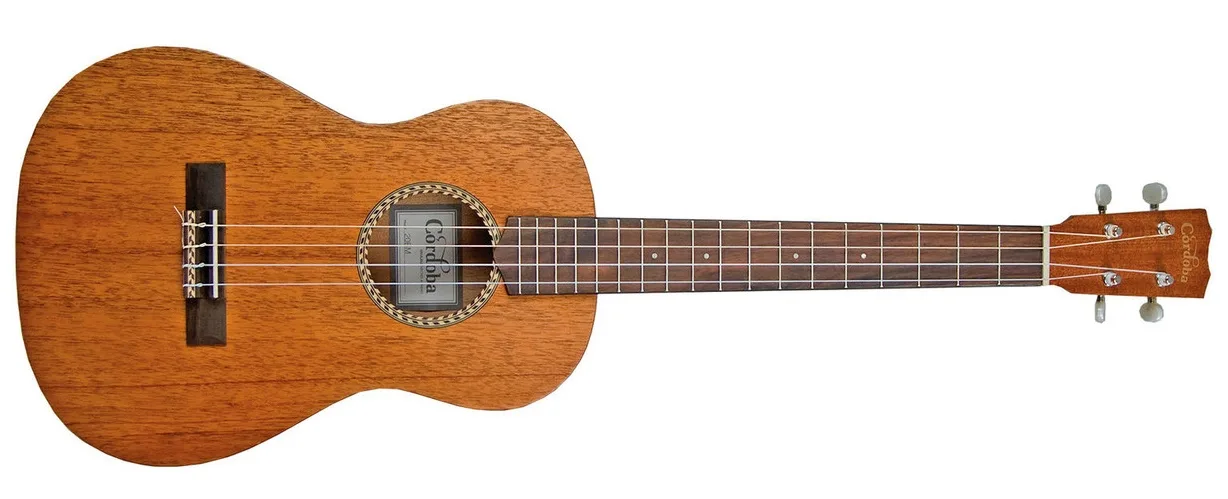
The baritone is the big one: around 30 inches, with a scale length of roughly 19 inches. And here’s where things get really different. The baritone is tuned to D-G-B-E, which is exactly the same as the top four strings of a guitar.
So if you already play guitar, the baritone is the easiest ukulele to pick up immediately. You already know all the chord shapes. You can dive straight in.
Fingerstyle guitar pioneer Chet Atkins was famously fond of the baritone ukulele for its warm, mellow character, and if you listen to recordings of him noodling on one, you can hear how beautifully it complements a fingerstyle approach.
Who is it for?
Guitarists who want to explore the ukulele without a steep learning curve, players who prefer a lower, warmer sound, and anyone wanting to use the same chord shapes they already know.
Sound character: Warm, mellow, deeper. Much closer to a classical or nylon-string guitar than to a classic ukulele.
Models to look at
-
Kala KA-B ~£150–£170 / $200–$225
Kala’s entry-level baritone. Mahogany body, comfortable neck, and a genuinely nice sound for the price.
-
Cordoba 20BM ~£150–£170 / $200–$225
A beautifully finished baritone with a warm, guitar-like character. Cordoba’s attention to detail really shines at this price point.
-
Kala Contour Baritone ~£400–£450 / $550–$600
An innovative, beautifully designed instrument that was one of the most acclaimed ukuleles of 2024. An excellent choice for a serious upgrade.
Size at a glance
| Size | Length | Tuning | Best for |
|---|---|---|---|
| Soprano | ~21” | G-C-E-A | Traditional sound, portability |
| Concert | ~23” | G-C-E-A | Beginners, versatility |
| Tenor | ~26” | G-C-E-A | Fingerstyle, professionals |
| Baritone | ~30” | D-G-B-E | Guitarists, warm tone |
Multi-string ukuleles: a quick note
Once you’ve spent some time in the ukulele world, you’ll start noticing instruments with more than four strings. These are not standard ukuleles, and I’d never recommend one as a first instrument. But if you’re an intermediate or advanced player looking to explore new sounds, they’re worth knowing about.
6-string ukulele: Typically a standard uke with two of the strings doubled, usually the G and A strings. The doubled strings are tuned in octaves (like a 12-string guitar), which produces a rich, shimmering, chorus-like effect. All your existing chord shapes work exactly the same. A good introduction to multi-string playing without the full complexity of an 8-string. The Ohana TK-70-6 (~£270–£300 / $350–$400) is a well-regarded solid spruce option.
8-string ukulele: All four strings are doubled, giving even more richness and volume. The effect is quite dramatic: much fuller and louder than a standard uke. Popular in Hawaiian traditional music. The Ohana TK-70-8 (~£295–£330 / $400–$460) is a reliable and well-built entry point.
Low G tuning: Not a multi-string instrument, but worth a mention here. Standard ukulele tuning uses a “re-entrant” high G string, meaning the G string is actually higher in pitch than the C string, which gives the uke its distinctive sound. Low G tuning replaces that string with a lower-pitched G, more like a guitar. The result is a fuller, more linear sound with greater bass depth. It’s particularly popular among fingerstyle players and is easily achieved by simply changing the G string on any tenor ukulele.
None of these options change the fundamentals of how you play the instrument. Your chord shapes and scales all remain the same. But they do open up a different sonic world when you’re ready to explore it.